What to Wear to an Indian Wedding: A Complete Guest Guide
Author
ANOKHI REET TEAM
Published On
June 17, 2026
Topic
Wedding Fashion

Are you currently staring at a beautiful, elaborate invitation and wondering exactly what to wear to an Indian wedding this season?
If you are feeling completely overwhelmed by the sheer number of events, the complex cultural expectations, and the seemingly endless wardrobe requirements, you are certainly not alone. Indian weddings are globally renowned for their unmatched grandeur, their vibrant explosion of colors, and celebrations that can span anywhere from three to five consecutive days. While being invited to such a joyous, culturally rich occasion is a massive honor, decoding the unwritten dress code for each specific ceremony can induce serious fashion anxiety. You want to look spectacular and respectful, but you also do not want to accidentally upstage the bride or commit a glaring cultural faux pas.
This is the ultimate, definitive guide to navigating wedding guest fashion. Whether you are attending your very first South Asian celebration or you are a seasoned wedding guest looking to elevate your style, we are going to break down exactly what is expected at every single major event.
General Rules: Colors and Modesty
Before we dive into the specific events, there are two fundamental, universal rules regarding Indian wedding attire that you must understand. The first rule pertains to color psychology. In traditional Hindu ceremonies, the colors black and white are generally avoided. White is historically associated with mourning in many South Asian cultures, while black is often considered inauspicious for joyous celebrations. While modern, progressive families are becoming increasingly relaxed about these rules (especially for evening receptions), it is always safer to lean into vibrant, celebratory colors. Red is also traditionally reserved exclusively for the bride, so it is best to avoid wearing a solid, bright red outfit to the main ceremony.
The second universal rule is about modesty. Indian weddings are deeply religious and family-oriented affairs, often involving sacred rituals performed by elders or priests. During the main religious ceremonies, such as the Pheras or the Anand Karaj, modest dressing is highly recommended. This typically means avoiding plunging necklines, excessively short skirts, or completely backless blouses out of respect for the religious setting. Many ceremonies also require you to cover your head when entering a temple or a Gurdwara, so always ensure your outfit comes with a matching dupatta or a lightweight scarf that you can easily drape over your hair.
The Haldi and Mehndi Ceremonies
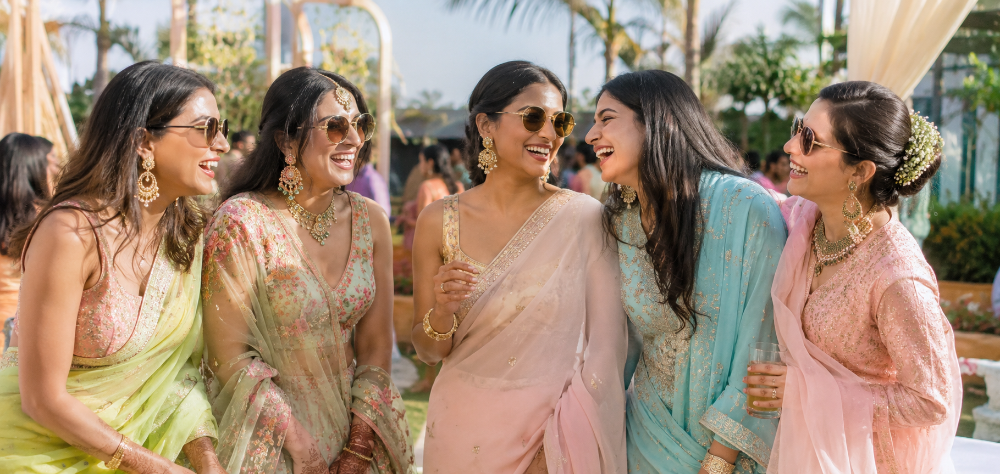
The wedding festivities usually kick off with the Haldi and Mehndi ceremonies. These are daytime events, characterized by an atmosphere of playful, chaotic fun. The Haldi involves applying a paste of turmeric, sandalwood, and rosewater to the bride and groom. Because things can get quite messy, this is not the time to wear your heaviest, most expensive silk garment.
The unwritten dress code for the Haldi heavily favors the color yellow. You will see guests in shades ranging from soft lemon to deep mustard. For this event, opt for lightweight, breathable fabrics like cotton or georgette. A simple yellow Anarkali, a comfortable salwar kameez, or a lightweight floral skirt with a crop top are absolutely perfect.
The Mehndi ceremony, where intricate henna patterns are applied to the bride's hands and feet, is similarly relaxed but slightly more festive. The traditional color palette for the Mehndi revolves around greens, ranging from mint to deep emerald, often mixed with bright pinks or oranges. Since you will likely be sitting for hours getting your own henna done, comfort is key. A chic sharara set with wide-leg pants or a vibrant, lightweight pre-draped saree allows you to move freely without worrying about tripping over heavy borders.
The Sangeet: Time for High Glamour
The Sangeet is arguably the most highly anticipated event of the entire wedding week. It is essentially a massive, glamorous dance party featuring choreographed performances by the family and friends. If there is ever a night to completely pull out all the stops and embrace high-end fashion, the Sangeet is it.
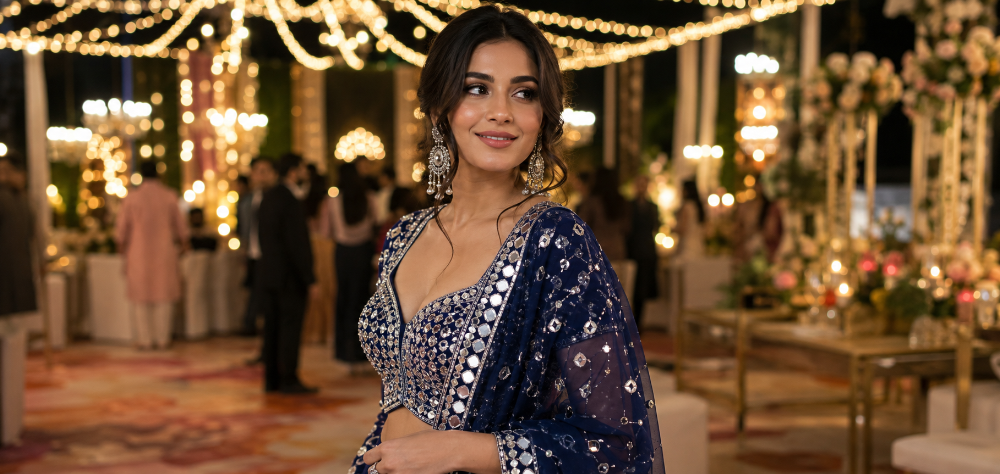
When deciding what to wear to the Sangeet, your primary focus should be on glamour and movement. You want an outfit that sparkles beautifully under the stage lights but also allows you to comfortably execute a complex Bollywood dance routine. This is the perfect occasion to wear deep, rich jewel tones like midnight blue, emerald green, ruby red, or deep plum. Metallic accents, heavy sequin work, and mirror-work (Abhala) are incredibly popular for this night.
A voluminous, heavily embellished lehenga is the classic Sangeet choice, but modern guests are increasingly opting for contemporary fusion wear. Consider an architectural cape set over tailored trousers, a dramatic dhoti-style drape with an embellished corset, or a sleek, metallic concept saree. These modern silhouettes offer incredible visual impact while being significantly lighter and easier to manage on a crowded dance floor than a traditional, heavy skirt.
The Main Wedding Ceremony
The main wedding ceremony, whether it is a morning temple wedding or a sunset beachfront Phera, is the emotional and religious core of the celebration. The fashion here shifts from the high-octane glamour of the Sangeet back to traditional, reverent elegance.
If the wedding is taking place during the day, pastel colors are absolutely spectacular. Soft blush pinks, powder blues, mint greens, and lilacs look incredibly elegant in natural sunlight. Fabrics like Banarasi silk, Kanjeevaram silk, and delicate Chanderi offer a sense of regal, traditional sophistication. A beautifully draped silk saree is always a universally flawless choice for the main ceremony. It projects maturity, respect for tradition, and timeless elegance. If you are not comfortable draping a saree, a classic, well-tailored Anarkali suit or a traditional silk lehenga with a heavy, beautifully draped dupatta are equally appropriate.
Remember, this is the bride's moment to truly shine in her heavy bridal attire, so while you should absolutely look your best, try to avoid outfits with incredibly massive, sweeping trains or excessive, blinding rhinestones that might accidentally steal focus during the religious proceedings.
The Grand Reception
The final event of the marathon is the Reception. This is typically a formal, black-tie equivalent event. The religious ceremonies have concluded, the bride and groom are officially married, and it is time for a sophisticated evening of dining and mingling. The Reception dress code is usually the most flexible, allowing for deep, moody colors and highly contemporary silhouettes.
For the Reception, you can safely move away from strictly traditional garments and embrace high-fashion fusion or Western-inspired evening wear. A beautifully tailored, floor-sweeping designer gown with subtle ethnic embroidery is a stunning choice. Alternatively, a sophisticated, monochromatic pre-stitched saree in a dark, romantic color like oxblood, navy, or deep charcoal gray looks incredibly chic. This is also the night where you can confidently wear luxurious, heavy fabrics like deep velvet, rich brocade, and heavy satin. Pair your outfit with a bold, modern statement necklace or incredibly dramatic chandelier earrings to complete the high-society look.
If you are feeling overwhelmed by the sheer number of distinct outfits required to attend these multiple events, you should definitely explore the smart rental options at Anokhi Reet. Renting is the ultimate, modern solution to the wedding guest wardrobe dilemma. Instead of spending an absolute fortune purchasing four separate, incredibly expensive designer outfits that you will likely never wear again, you can borrow them. Renting allows you to wear a bright, playful outfit for the Mehndi, a heavily sequined designer piece for the Sangeet, and an elegant silk ensemble for the ceremony, all for a fraction of the retail cost. It guarantees you will be perfectly dressed for every single dress code without completely draining your bank account.
Final Grooming and Accessory Tips
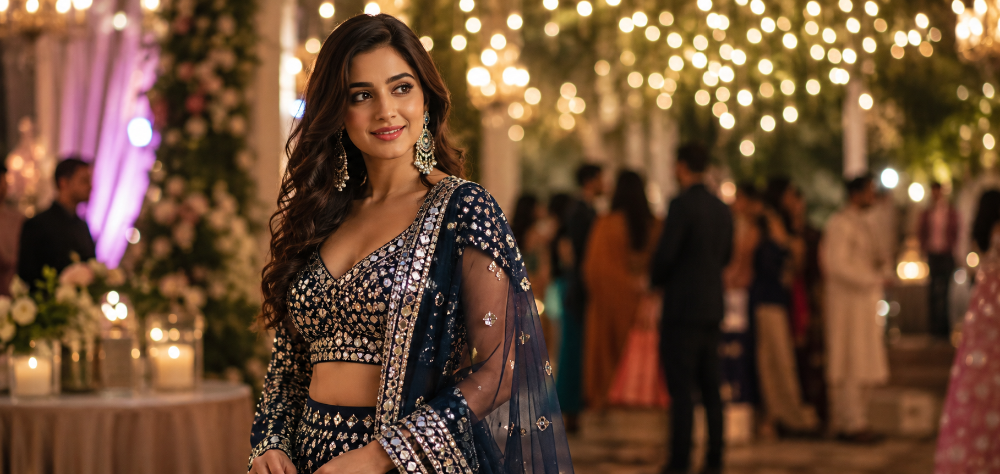
Your outfit is only the foundation of your wedding guest look; the accessories and grooming are what truly elevate it to the next level. Indian weddings are the perfect excuse to wear the heavy, dramatic jewelry that you rarely get to use in your daily life.
Do not be afraid to layer your accessories. A beautiful Kundan choker paired with matching Jhumkas (traditional bell-shaped earrings) and a stack of colorful glass bangles can instantly transform a simple, plain outfit into a spectacular, wedding-ready ensemble. However, balance is crucial. If your outfit is incredibly heavily embroidered and loud, opt for slightly more understated, elegant jewelry so you do not look like a walking jewelry display. Conversely, if you are wearing a solid, minimalist silk saree, you can absolutely go overboard with a massive, statement Polki necklace.
For your hair and makeup, ensure your look matches the specific event. Keep your makeup fresh, glowing, and relatively light for the daytime Haldi and wedding ceremonies. Save the dramatic, smoky eyes, the heavy contouring, and the bold, dark lip colors for the evening Sangeet and Reception. A sleek, tightly pinned bun decorated with fresh jasmine flowers is a beautiful, traditional choice that also serves the highly practical purpose of keeping you cool during crowded, energetic events.
In conclusion, attending these grand celebrations is a truly magical experience. While the fashion expectations can initially seem daunting, decoding the dress codes is simply about understanding the mood of each specific event. Once you grasp the unwritten rules of color, modesty, and event-specific styling, choosing your wardrobe becomes an incredibly fun, creative process. By utilizing smart solutions like designer rentals and playing with beautiful accessories, you can step into every single ceremony feeling confident, respectful, and absolutely breathtaking.


